Eyelid Dryness can make the skin around your eyes feel tight, rough, flaky, itchy, or sore. Because the eyelid area has thin, sensitive skin, small changes in weather, skincare, or daily habits can quickly cause discomfort. Learning the cause can help you choose gentle care instead of trying random treatments.
Eyelid Dryness may appear as a dry eyelid, peeling skin, redness, or a dry spot on eyelid skin. Some people also notice eyelid dryness and itching, while others have symptoms inside the eyes, such as burning, grittiness, watering, or blurry vision. This guide explains the common causes, simple care steps, prevention tips, and signs that need professional attention.
1. Spot the Signs
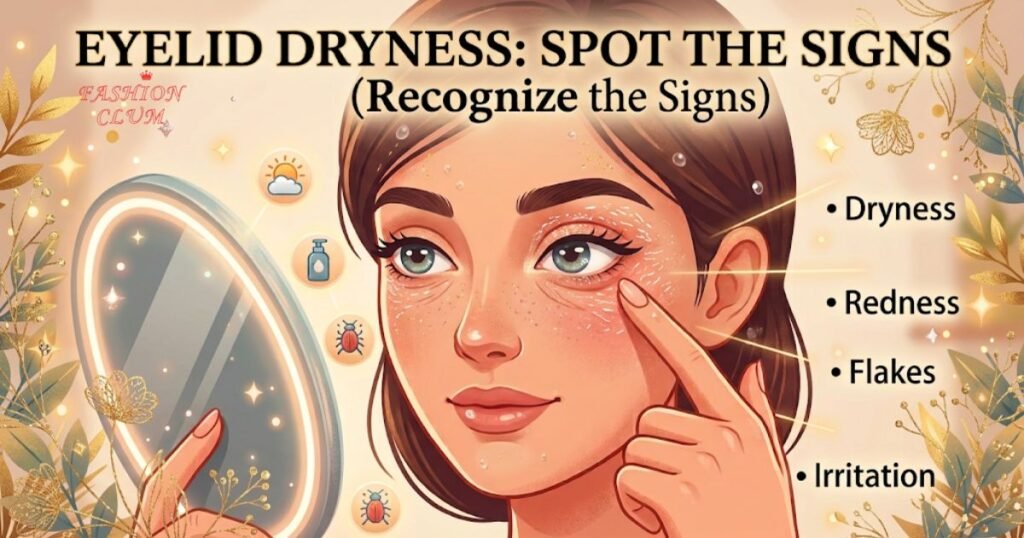
The first signs of Eyelid Dryness may be easy to overlook. Your skin might feel tight after washing, look dull or flaky, or become slightly red. You may notice tiny flakes near the lashes or a rough patch above the eye. These changes often happen when the skin barrier loses moisture or becomes irritated.
A dry eyelid can also feel uncomfortable when you blink, touch, or apply makeup. Scratching may give quick relief, but it can increase irritation and make the skin barrier weaker. If you notice Eyelid Dryness after using a new cosmetic or cleanser, that product may be an important clue.
Eyelid dryness and itching often occur together. Contact dermatitis, eczema, allergies, and irritation can all make the area itchy. If you have dry inside eyelids, however, the feeling may be coming from the inner eyelid or the eye surface rather than only from the outer skin.
It is useful to notice whether your problem is limited to the skin. Burning, gritty eyes, light sensitivity, watering, or changing vision may point to dry eye. Eyelid Dryness and dry eye can happen at the same time, but they are not exactly the same condition.
2. Find the Cause
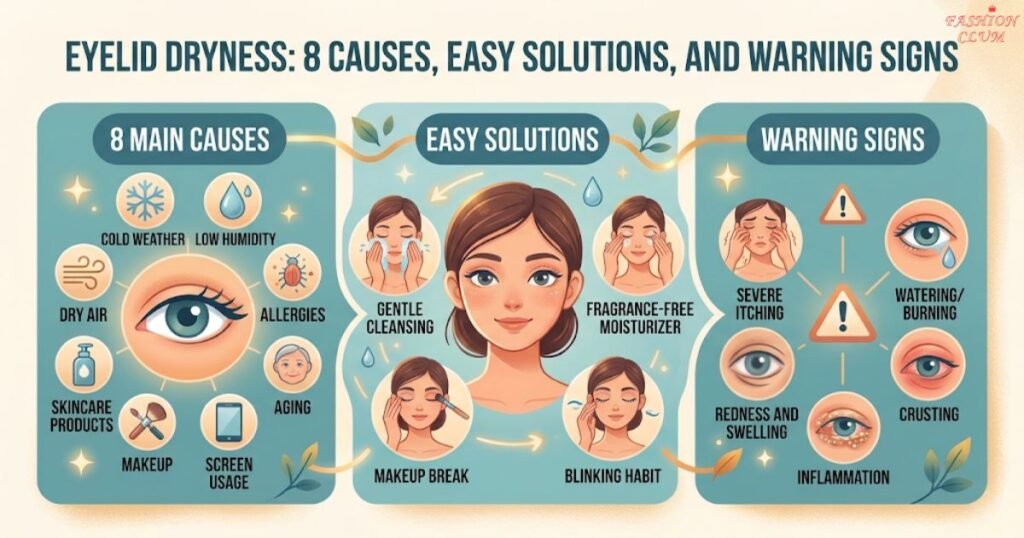
Weather is a common reason for Eyelid Dryness. Cold air, wind, heat, sunlight, and low humidity can remove moisture from delicate skin. Indoor heating and air conditioning may also make the surrounding air dry. Smoke and other airborne irritants can make sensitive skin feel worse.
Skincare and cosmetics can be another trigger. Cleansers, makeup, sunscreen, fragrances, and some ingredients may irritate the eyelids. A reaction can happen even if you have used a product before without trouble. Contact dermatitis may be irritant-related or caused by an allergy.
Skin conditions can also lead to Eyelid Dryness. Atopic dermatitis may cause dry and itchy skin, while psoriasis can create scaly patches. Seborrheic dermatitis may affect the eyelid area, and blepharitis can cause crusting, burning, redness, itching, and irritation around the lashes.
Age can also affect the skin’s natural moisture and protective oils. If Eyelid Dryness starts suddenly, think about what changed before it appeared. A new product, season, workplace exposure, medicine, or habit can sometimes reveal the likely trigger.
3. Skin Dryness or Dry Eye?
Eyelid Dryness affects the skin of the eyelids, while dry eye affects the tear film covering the surface of the eyes. These conditions can occur together, but one does not automatically mean you have the other. Knowing the difference can help you choose the right type of care.
What does dry eye feel like? Many people describe a gritty, sandy, scratchy, burning, or stinging feeling. It may feel as if something is stuck in the eye. Redness, watering, light sensitivity, and mucus can also occur.
If you are searching what do dry eyes feel like, remember that dry eye does not always feel simply dry. Some people develop extra tearing because the eyes react to irritation. The tear film may also become unstable, causing vision to look blurry or change during the day.
This is why searches such as an eye dryness cause blurred vision are common. Dry eye can cause temporary or fluctuating blurry vision. If you wonder, can dry eyes cause blurry vision, the answer is yes, but new or sudden vision changes should not automatically be blamed on dryness.
4. Soothe the Skin

For mild Eyelid Dryness, start with gentle care. Wash the area with lukewarm water and avoid very hot water. Do not scrub, peel flakes, or rub the skin. Touch your eyelids only with clean hands, especially when the area is already irritated.
If you suspect a product is causing Eyelid Dryness, stop using it for a while. Give the skin a break from unnecessary makeup and strong skincare products. Avoid adding several new products at once because that can make it difficult to find the trigger.
If you want to know how to soothe irritated skin around eyes, focus on protecting the skin barrier. A simple fragrance-free moisturizer suitable for sensitive skin may help. Keep skincare products out of the actual eye unless they are made for eye use.
Dry air can make Eyelid Dryness worse. If your home or workplace is very dry, improving humidity may help. Also avoid direct airflow from fans, heaters, and air conditioners toward your face. These simple changes can reduce irritation while the skin recovers.
5. Can It Improve Overnight?
Many people search how to get rid of dry eyelids overnight because they want fast results. Mild irritation may feel better after the trigger is removed, but there is no safe method that guarantees complete recovery in one night. Healing time depends on the cause and how irritated the skin has become.
To calm Eyelid Dryness, stop products that may be causing burning, itching, or redness. Avoid makeup and strong exfoliating products until the area feels comfortable again. Gentle cleansing and suitable moisture are usually better than aggressive treatments.
Do not scrape away flakes or use harsh acids, scrubs, or strong creams without professional advice. The skin around the eyes is very delicate. Trying to remove visible dryness quickly can create more inflammation and make Eyelid Dryness last longer.
If the same problem returns again and again, overnight care is not the main answer. You need to find the cause. A healthcare professional can check for dermatitis, eczema, allergies, blepharitis, or another condition that may need specific treatment.
6. Understand Sudden Eye Dryness
If you are asking what causes dry eyes all of a sudden, several factors may be involved. Dry air, wind, smoke, allergies, long screen use, contact lenses, some medicines, and certain health conditions can contribute to dry eye. This is different from skin-related Eyelid Dryness.
Screen use can be an everyday factor. People often blink less when they concentrate on a phone, tablet, or computer. Less blinking can make the tear film less stable. Regular screen breaks and conscious blinking may help reduce discomfort.
Some medicines can contribute to dry eye, and certain health conditions may also increase the risk. If sudden eye dryness keeps happening, an eye-care professional can assess your eyes and ask about medicines, contact lenses, environment, and other possible causes.
Eyelid Dryness can also appear alongside dry-eye symptoms when the eyelids or surrounding skin are irritated. Treating only the skin may not solve eye discomfort if the tear film is also affected. That is why the exact symptoms matter.
7. Understand Vision Risks
Can dry eyes cause blindness? Mild or ordinary dry eye does not normally cause blindness. However, severe, untreated dry eye can sometimes damage the cornea and lead to complications. That is one reason persistent eye symptoms should not simply be ignored.
Do dry eyes cause blurry vision? They can. When the tear film becomes unstable, vision may temporarily become unclear or fluctuate. Blinking may improve the blur for a short time. Still, not every episode of blurry vision is caused by dry eye.
Eyelid Dryness itself does not usually cause blindness or serious vision loss. However, if the skin problem occurs with severe eye pain, sudden vision loss, major redness, injury, or strong light sensitivity, you should seek prompt medical care instead of treating the issue only at home.
Blepharitis can sometimes cause both eyelid irritation and dry-eye symptoms. It may lead to crusty lashes, redness, burning, itching, watering, or a feeling that something is in the eye. A professional eye examination can help identify the cause.
8. Know When to Get Help
Mild Eyelid Dryness may improve when you remove an irritating product and use gentle skin care. If symptoms do not improve, keep returning, or become more severe, professional advice can help. Finding the cause is more useful than repeatedly treating the visible flakes.
A dermatologist can help when the main problem is dry, red, scaly, or itchy skin. An eye doctor is useful when you also have eye pain, blurred vision, discharge, strong redness, light sensitivity, or ongoing dry-eye symptoms. Sometimes both types of care may be needed.
Do not use strong medicated or prescription creams around your eyes without professional guidance. Products that are safe for other areas of the body may not be suitable near the eyes. The correct treatment depends on the cause of Eyelid Dryness.
Seek prompt care for sudden vision changes, severe eye pain, major swelling, serious injury, or symptoms that are rapidly getting worse. Persistent Eyelid Dryness also deserves an assessment if simple care does not help.
Prevention Tips
Preventing Eyelid Dryness starts with protecting the thin skin around your eyes. Avoid rubbing or pulling the eyelids, even when they itch. Remove makeup gently and avoid harsh cleansers. Keeping the area clean without over-washing can help protect its natural barrier.
Pay attention to products that touch your eyelids. If a cosmetic or skincare product repeatedly causes Eyelid Dryness, burning, or itching, stop using it and discuss the reaction with a professional if it continues. Choose simple products designed for sensitive skin.
Protect your face from wind, cold, smoke, and very dry air. If screen use makes your eyes uncomfortable, take regular breaks and blink often. These habits may help when skin irritation and dry-eye symptoms appear together.
Most importantly, do not ignore repeated Eyelid Dryness. A recurring problem may be a sign of dermatitis, allergy, blepharitis, or another issue. Understanding the trigger can help prevent the same cycle from happening again.
Conclusion
Eyelid Dryness can be caused by weather, low humidity, skincare products, allergies, dermatitis, eczema, blepharitis, and other factors. Gentle cleansing, avoiding known triggers, protecting the skin, and using suitable moisture can help mild cases. It is also important to remember that dry eyelid skin and dry eye are different problems.
If Eyelid Dryness keeps returning or comes with pain, swelling, discharge, strong redness, or vision changes, speak with a healthcare professional. Do not rely only on quick fixes. Finding the real cause can lead to safer and more lasting relief.
FAQs
Q: Can eyelid dryness cause itching?
A: Yes. Dry or irritated skin can become itchy, especially with dermatitis or an allergic reaction.
Q: Can dry eyes cause blurry vision?
A: Yes. An unstable tear film can cause temporary or fluctuating blurry vision.
Q: Can dry eyes cause blindness?
A: Mild dry eye does not usually cause blindness, but severe untreated disease can sometimes cause corneal complications.
Q: How can I soothe irritated skin around my eyes?
A: Avoid irritants, do not rub the area, cleanse gently, and use a suitable fragrance-free moisturizer.
Q: Can dry eyelids improve overnight?
A: Mild irritation may improve quickly, but complete recovery overnight is not guaranteed.
Q: When should I see a doctor?
A: Get professional advice if symptoms persist or occur with pain, swelling, discharge, severe redness, or vision changes.
Q: What causes eyelid dryness?
A: Weather, low humidity, irritants, allergies, dermatitis, eczema, and blepharitis are common causes.